
Bar Stool Height & Dimensions: Size & Measurement Guide
The common stool height categories can confuse you when looking for the right measurements. And if you are thinking of elevating your kitchen, dining, or bar space, then stools play a vital role. However, getting distracted by the colours or just for aesthetics can lead to discomfort if the right bar stool measurements are not considered. To make your barstool-purchasing journey simple and instant, here is a barstool height guide to help you.
Bar Stool Dimensions & Size Chart
Use the table below as a quick guide to common stool heights and the surfaces they are generally suited to.
| Stool Type | Typical Seat Height | Typical Surface Height | Common Use |
|---|---|---|---|
| Low/Table Stool | 16–23" (40–58 cm) | 24–28" (61–71 cm) | Low tables and casual seating |
| Counter Stool | 24–27" (61–69 cm) | Around 36" (91 cm) | Kitchen counters and some kitchen islands |
| Bar Stool | 28–33" (71–84 cm) | 40–42" (102–107 cm) | Breakfast bars and bar-height counters |
| Spectator Stool | 34–36"+ (86–91+ cm) | 45–48" (114–122 cm) | Extra-high counters and tables |
These measurements are a general guide rather than a rule for every stool or counter. Kitchen islands, breakfast bars, and tables can vary in height, so always measure your space and check the stool dimensions before ordering.
How to Measure Stool Height in the Right Way?
Always learn about the space that you are renovating or even making slight changes in. Something as simple as adding a barstool can enhance your space. But choosing the right one is important. And barstool-height measurements for counters can be a game-changer. So, follow the steps below to get the right bar stool measurements suitable for counter height/Kitchen island.
Requirements:
- A rigid or flexible measuring tape
- A flat surface
- Any type of stool, stable and upright
Steps to Measure Bar Stool Height
1. Measure your counter or bar
Measure vertically from the floor to the underside of the counter, breakfast bar or kitchen island where you will be sitting. Measuring the underside gives you a clearer idea of the actual space available for your legs.
2. Measure the stool seat height
Place the stool upright on a level surface and measure vertically from the floor to the seat's highest point. For an upholstered stool, measure to the top of the seat rather than the frame underneath it.
3. Calculate the available legroom
Subtract the stool's seat height from the height to the underside of your counter. As a general guide, 9–13 inches (23–33 cm) of clearance between the seat and the counter provides suitable legroom for many users.
4. Check the complete stool dimensions
Height isn't the only measurement to consider. Check the stool's overall width and depth to ensure it fits comfortably in your available space.
For adjustable bar stools, check both the minimum and maximum seat height rather than assuming that every adjustable stool will fit your counter.
Types of Stools & Height Measurements
How you want to use the stool and the height of your table or counter will determine which stool is best for you. With four of the best stool types, choose the one that is right for you.
1. Counter Stool
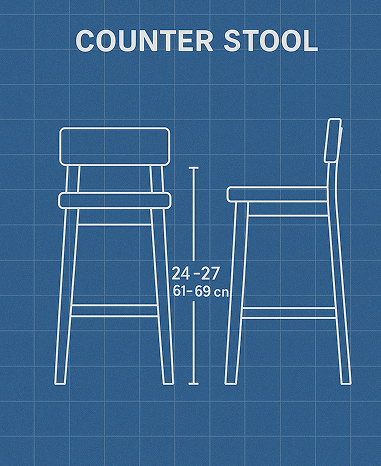
Counter stools are best for kitchen counters, providing a casual and homely look if you are going for a similar theme. They are one of the best options you can include in your decor, with comfortable seating at the proper stool height for a counter.
- Recommended Height: 24 to 27 inches
- Best For: Standard kitchen counters (36-inch high surfaces).
2. Bar Stool

Bar stools are tall, narrow seats typically used at bars, high-top tables, or elevated kitchen counters. It often comes with footrests and may have backrests, armrests, or swivel features. Choosing the right height for a bar stool is very important when it comes to enhancing your space and following the bar stool measurements can you help you with all of it.
- Seat Height Range: 28 to 33 inches (71–84 cm)
- Recommended Counter/Table Height: 40 to 42 inches (102–107 cm)
- Legroom Rule: Leave 9 to 13 inches between the top of the seat and the bottom of the counter.
3. Spectator Stool
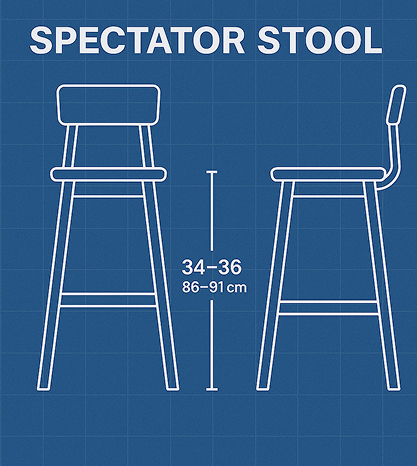
A stool best for commercial spaces, and a slightly taller version on a barstool, is a spectator stool. This stool is designed for extra-high counters and viewing platforms. To set this up in your space, such as a restaurant or a kitchen island, you have to take a look at the counter height. Make sure the spacing and gap are precise for setup, as you use the following for reference,
- Seat Height Range: 34 inches and above (typically 34"–36", but can go higher)
- Matching Surface Height: 45 to 48 inches
- Legroom Tip: Maintain a 9–13 inch gap between the seat and the underside of the table/counter.
4. Low Stool

A low stool is a small, short seat that is frequently used as a footrest, dressing table, children's area, or casual seating. In confined locations, it provides optimal portability and occupies less space. But not choosing the right barstool can hurt your back. So, make sure the stool height is comfortable and space-saving with the right measurements.
- Seat Height Range: 16 to 23 inches (40–58 cm)
- Matching Surface Height: 24 to 28 inches
- No footrest is needed, as feet usually rest on the floor
Importance of Stool Footrest Height & Support
A footrest becomes particularly useful on taller stools because your feet may not reach the floor when seated. It provides a natural place to rest your feet and can make the stool more comfortable to use, particularly when sitting for longer periods.
When comparing bar stools, consider the position of the footrest relative to the seat rather than its height from the floor alone. Your feet should be able to rest comfortably without forcing your knees into an awkward position.
A well-positioned footrest can also make it easier to get onto and off a taller stool.
FAQ's on Barstool Height
Here are the most common questions asked when purchasing a barstool. These will help you understand and determine what you should know before you buy a barstool.
1. How much is the recommended height of a Barstool?
The standard bar stool seat height is 28–33 inches (71–84 cm). Bar-height counters are 40–42 inches (102–107 cm).
2. Counter vs Bar vs Island: What’s the Difference?
|
Features |
Counter Stools |
Bar Stools |
Island Stools |
|
Height |
35"–37" (standard kitchen counter) |
40"–42" (tall bar height) |
Varies: 36" (counter) or 42"+ (bar style) |
|
Common Use |
Meal prep, casual dining, seating |
Entertaining, drinking, socialising |
Multipurpose: cooking, seating, serving |
|
Matching Stool |
Counter stools (24"–27" seat height) |
Bar stools (28"–33" seat height) |
Depends on height: counter or bar stools |
3. What is the recommended gap between the seat and the counter?
Generally, the recommended gap between the seat and the counter is 9 to 13 inches. Less than this can cause discomfort and legroom might be insufficient. Here is an example to understand better,
If your counter is 36 inches high, your stool seat should be around:
- 24–27 inches high
→ 36" (counter) – 9–13" (gap) = ideal seat height
4. Why are Adjustable Stools a Good Option?
Adjustable stools are more flexible and reliable than normal stools. They are perfect for multi-height setups or evolving spaces. This will save budget and also no need to go through a lot of struggle with counter height & stool height. No need for bar stool measurements; you can simply pick an adjustable stool that suits your space.
Tips to choose the right Adjustable stools:
Look for adjustable stools with:
- Footrests that move with seat height.
- 360° swivel for easier access.
- Heavy, stable bases for safety.
5. Which are the Best Stool Types for Small Spaces?
If you want to incorporate stools in your small space, always go for the features below, as they will be a good fit and make the space look more put together.
- Slim legs: opt for a less visually bulky stool that will consume less space.
- Lightweight build: portable and easy to handle.
- Only Seat: No arms and no back; it could easily slide under the counter.
- Double duty: Pick a multipurpose stool that saves you storage space and seating space.
6. What are kid-friendly barstools for high counters? Why is it important?
Creating a kid-friendly kitchen or dining area means choosing the right stool height, safety features, and comfort levels so that children can sit securely and confidently. And for that, you should consider these factors when choosing the right barstool height and seat comfort.
Key Features Not to Miss:
- Low-Height Stool: So it's easier for children to access.
- Back support: Prevents kids from falling or tripping.
- Wide stool base: To offer stability and not move that easily.
- Avoid Sharp edges: Prevents cuts and accidents.
Conclusion
Selecting the right barstool height, type, and features isn't just about looks — it's about ensuring comfort, safety, and functionality for everyone who uses it. From the counter to the bar to island seating, the right stool promotes healthy posture and circulation. And you can explore the best barstools that will enhance your space at simplybarstools.co.uk.